

Intent·the quiet engine behind every choice
What you carry into a moment shapes what comes out of it — for you, for the people around you, and slowly for the world. Information only, not professional advice.
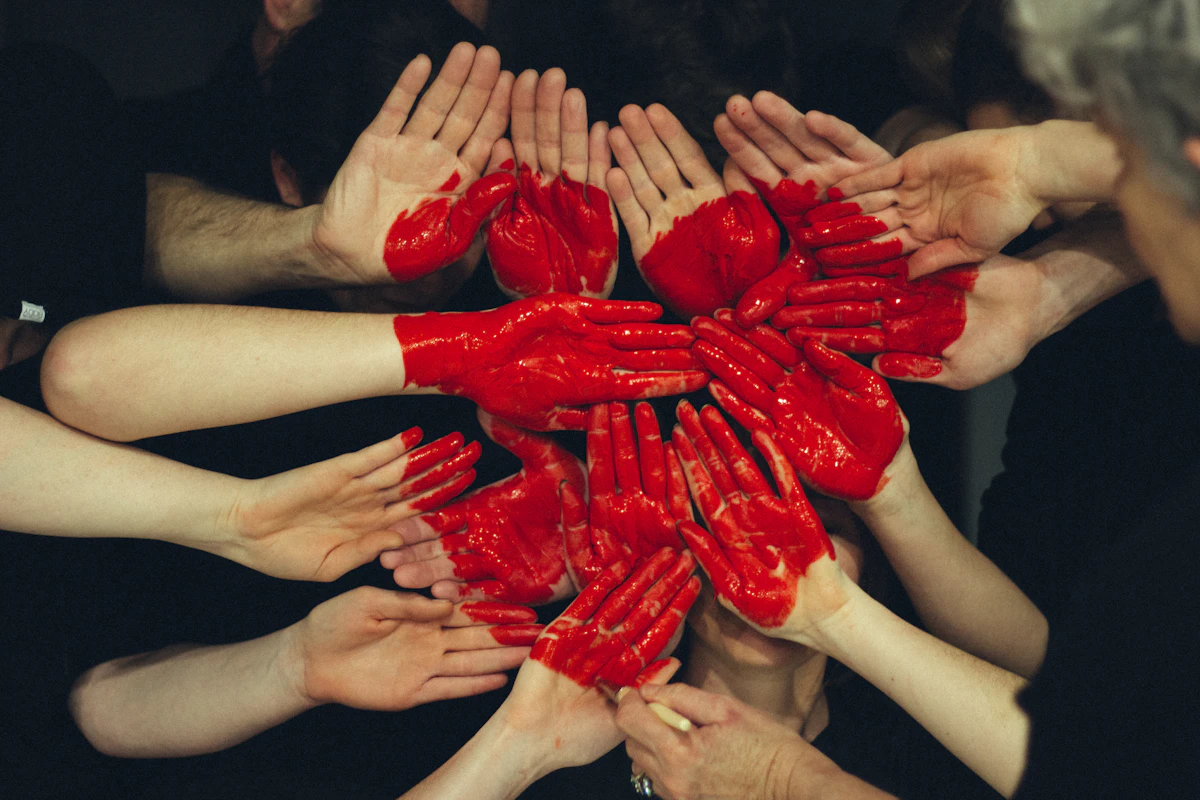
Photo: Simon Berger / Unsplash

What intent really is
Intent is the silent direction you bring to a moment before any words are spoken or any action is taken. It is the reason underneath the reason — the angle of the heart that decides whether the same sentence becomes a kindness or a weapon, whether the same gift becomes generosity or a bribe, whether the same effort becomes service or a performance.
Goals tell you where you are going. Intent decides how you arrive — and who you become along the way. Two people can build the same school, write the same law, or raise the same child, and the result will differ profoundly because their intent differed. The visible world is downstream of intent.
The intent you carry toward yourself
Before you ever face the world, you face yourself — and the tone of that meeting shapes everything that follows. If your intent toward yourself is critical, suspicious, or punishing, even your successes feel hollow and your mistakes feel fatal. If your intent toward yourself is honest but generous, you can fail without collapsing and grow without forcing.
Self-worth, confidence, habits and direction all grow out of one quiet question: am I on my own side? Being on your own side is not the same as flattering yourself. It means refusing to abandon yourself when you fall short, the way a wise friend would refuse to abandon you.

The intent you carry toward others
People rarely remember our exact words. They remember how it felt to be in the room with us. That feeling is intent, leaking quietly through tone, eye contact, timing and pauses. Trust is not built by what we say; it is built by what others sense we wanted while we were saying it.
Bring the intent to understand and a difficult conversation becomes a bridge. Bring the intent to win and even agreement leaves a residue of grievance. Bring the intent to belong together and conflict can deepen a relationship instead of breaking it. Cooperation, compassion, community — all of these are intent made visible.
Same event, different story
A redundancy letter, an honest piece of feedback, a missed train, an unexpected illness — each event is, in itself, a neutral fact. What we make of it depends almost entirely on the intent we bring to it. Approach a setback with the intent to learn, and it becomes a teacher. Approach the same setback with the intent to confirm that life is against you, and it becomes one more piece of evidence in a long, lonely case.
This is not denial. It is direction. The facts do not change — but the meaning you assign, the next action you take, and the story you tell yourself about who you are, all bend around your intent. Two people lose the same job; one rebuilds, one collapses. The difference is rarely talent. It is usually intent.


Constructive and destructive intent
Constructive intent wants something to exist — a person to grow, a truth to be heard, a problem to be solved, a relationship to deepen. It is patient with imperfection because it is committed to the long arc of becoming. Destructive intent wants something to not exist — a rival diminished, a feeling silenced, a memory erased, a person made smaller. It is impatient, because it is committed only to relief.
Both forms of intent live in every human being. The honest question is never "am I a constructive or destructive person?" but "which intent am I feeding in this moment?" The fire in a forge can shape a tool or burn the workshop down. Same flame. Different intent.
How intent steers perception, decisions and outcomes
Intent is upstream of almost everything we credit to "personality" or "luck." It tilts perception first: when you are looking for threats, you find them; when you are looking for openings, you find those instead. It tilts decisions next: every option is weighed on a scale set by your underlying aim. It tilts action through the small choices nobody else sees — the email you didn't quite send, the call you nearly made, the second chance you almost gave.
And it tilts outcomes, because the world reliably gives back what it senses we are reaching for. Reach for proof that people are selfish and the world will obligingly supply it. Reach for proof that ordinary kindness is everywhere and you will start to see it too. Intent is the current; results are the river's path.


Intent through history
Every invention, discovery, movement and war can be traced back to an intent held by someone — usually long before the world noticed. Marie Curie pursued the radiance of radium with the intent to understand, and refused to patent her process so the knowledge could heal more people. The Wright brothers shared a small bicycle workshop and an outsized intent to make flight ordinary. Rosa Parks stayed in her seat with the intent that her grandchildren would not have to.
The same instruments of human ingenuity have been turned to opposite ends because the intent behind them differed. Chemistry has given us both medicine and poison gas. The internet was built with the intent to connect researchers, then used variously to liberate and to exploit. Every great catastrophe in history began with someone's permission to themselves to want something at any cost. Every great recovery began with someone's stubborn intent to repair.
When intent becomes conscious
Most intent runs in the background, unexamined — inherited from family, culture, fear, ambition and the thousand small wounds we have not yet looked at. Becoming conscious of intent does not mean becoming suspicious of yourself. It means turning on the light and asking, gently, "what am I actually reaching for here?"
That single question has changed lives. It is the move at the heart of most wisdom traditions, most good therapy, most lasting recovery, and most quietly happy old age. People who do this regularly become noticeably easier to be around. They argue less, listen more, apologise faster, and laugh at themselves with affection rather than shame. Empathy is not a personality trait; it is a by-product of seeing one's own intent clearly.


When intent hides from you
Unconscious intent is the most expensive kind. Fearful intent disguises itself as caution. Selfish intent disguises itself as common sense. Resentful intent disguises itself as honesty ("I'm just telling the truth"). Avoidant intent disguises itself as keeping the peace. We don't lie to others nearly as often as we lie quietly to ourselves about what we were really trying to do.
The cost shows up later: in relationships that erode without an obvious cause, in opportunities that quietly stop arriving, in a vague sense that life is happening to us. None of this requires bad people. It only requires unexamined intent. The encouraging news is the reverse: a small piece of honesty about your own motives, today, can change the shape of months to come.
Six ways to examine your intent today
Intent is not a personality you are stuck with; it is a muscle. You can train it the way you would train attention, balance or kindness — through small, repeatable acts of noticing. None of this requires extra time. It only requires turning the light on the engine that was running anyway.
- The pre-conversation pause. Before any meaningful exchange, ask silently: "What am I hoping leaves this room with us?" If the honest answer is "victory," try again.
- The two-word check. When you're about to act, name your intent in two words ("to help," "to look good," "to avoid," "to control"). Two words is short enough to be honest.
- The replay. At the end of the day, pick one moment that did not go well. Ask not "what should I have said?" but "what was I actually trying to do?" The answer is often the lesson.
- The opposite test. If a friend did exactly what you did, with the intent you suspect you had, would you admire it or wince? Wincing is information.
- The upgrade. Choose one recurring situation (a difficult colleague, a tense family meal, your reflection in the mirror) and consciously rewrite the intent you bring to it for a week. Then notice.
- The morning sentence. Start the day by finishing one sentence on paper: "Today, I am bringing the intent to…" Five words. It will steer surprisingly much.


A future built on conscious intent
Civilisations are not, in the end, built by laws, money or technology. They are built by the cumulative intent of millions of small decisions: how a parent speaks to a tired child, how a stranger is treated in a queue, how a leader chooses between an easy lie and a hard truth, how a society treats the people it could most easily forget. Every era inherits the intent of the era before — and quietly writes the intent that the next era will inherit.
We are not separate from this. The phrase that gives this site its name — we are all one — is, at heart, a statement about intent. It is the decision to treat the wellbeing of others as inseparable from our own, because in the long run it is. A world that takes intent seriously becomes, very slowly and then suddenly, a kinder place. Not utopia. Just a place where more people, more often, choose to build rather than diminish.
That choice is not made by humanity in general. It is made by individual humans, one at a time, beginning with the next thing you do after closing this page.