

Hope·the quiet engine that keeps us moving
Hope is not a feeling you wait for. It is a practice you choose — especially when the evidence seems stacked against it. Information only, not professional advice.
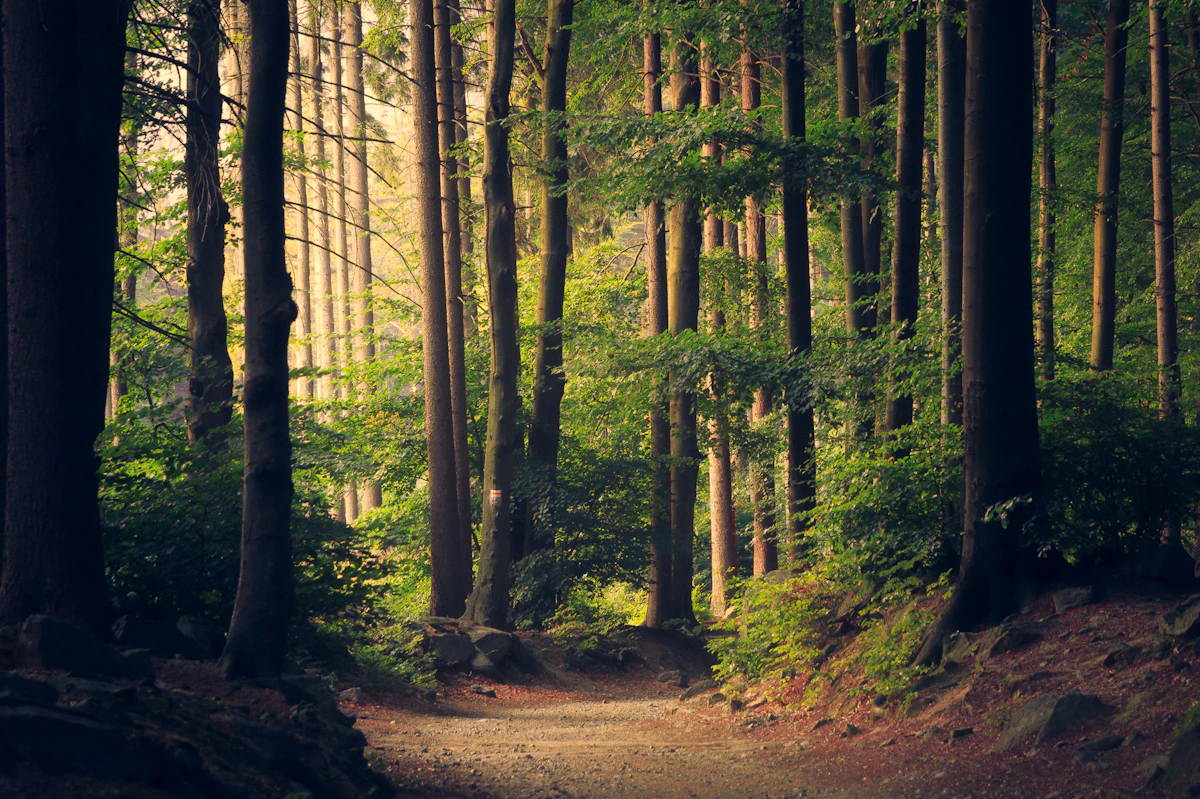
Photo: Danny Lines / Unsplash
Not just a feeling
The psychologist C. R. Snyder spent decades studying hope — not as a vague sentiment, but as a measurable cognitive process. His research, now widely validated, found that hope consists of two things working together: agency — the belief that you can make things happen — and pathways — the ability to find routes forward, especially when the first one is blocked.
This matters because it means hope is not temperament. It is not the same as cheerfulness, and it is not reserved for optimists. Hope is a skill. Snyder's studies showed that people with higher hope scores perform better academically, recover faster from injury, cope more effectively with pain — not because their circumstances were easier, but because they had learned to generate routes forward when none were obvious.
Hope is not the absence of obstacles. It is the conviction that obstacles can be navigated — not necessarily by the path you planned, but by a path that exists.
What hope is not
The Czech dissident and playwright Václav Havel — who wrote about hope from a prison cell under a communist regime that had stripped him of nearly everything — drew a distinction that changes how the word lands: "Hope is definitely not the same thing as optimism. It is not the conviction that something will turn out well, but the certainty that something makes sense, regardless of how it turns out."
Optimism bets on a favourable outcome. Hope bets on meaning. An optimist looks at a dark situation and says it will brighten. A hopeful person looks at the same darkness and says: even if it doesn't, my actions still count. That distinction is everything — because optimism can be shattered by reality, but hope, properly understood, cannot. It is anchored not in how things look, but in why things matter.
Hope is also not the same as toxic positivity — the demand that we skip past pain and perform cheerfulness. Real hope sits with the difficulty. It does not bypass grief; it walks through it, carrying purpose.


Hope under pressure
The most reliable testimony about hope does not come from people whose lives were easy. Viktor Frankl, surviving Auschwitz, observed that prisoners who held onto some sense of meaning — some thread of purpose, however small — survived at measurably higher rates than those who gave up. Desmond Tutu, living through apartheid South Africa at its most brutal, said: "Hope is being able to see that there is light despite all of the darkness."
This is not poetic optimism from a safe distance. This is testimony from people positioned precisely where hope should have been impossible — and who found it was not. Frankl did not hope because he thought he would survive. He hoped because he decided that how he faced his suffering still mattered, regardless of outcome. That hope had nothing to do with a prediction and everything to do with a decision.
The deepest hope is not a wager on good odds. It is a stance you take when the odds are invisible. That is why it cannot be taken from you — because it never depended on the odds in the first place.
Hope across cultures
Hope is not a Western invention. Every human culture that has ever existed has developed language, ritual and story to describe the act of reaching forward into uncertainty. In Japanese, the word kibÅ (希望) combines the characters for "wish" and "gaze" — to look toward something not yet here. In the Zulu philosophy of ubuntu, hope is inseparable from shared humanity: a person hopes not in isolation but through their belonging to others.
The German philosopher Ernst Bloch, writing his monumental work The Principle of Hope while in exile from the Nazis, argued that hope is not a luxury or a comfort — it is the fundamental engine of human life itself. Every child who imagines a future self, every worker who gets up believing the day holds possibility, every community that rebuilds after disaster — all of it, Bloch argued, is hope in action. It is so embedded in being human that we fail to notice it, the way a fish fails to notice water.
Bloch called hope "the most human of all mental experiences." Not because it is optional, but because without it we do not reach, do not build, do not heal — we simply stop.


Small acts, repeated
The writer and activist Rebecca Solnit, in her book Hope in the Dark, makes a case for hope as a form of discipline rather than a mood. She traces the untold history of victories that looked impossible until they happened — the fall of the Berlin Wall, the end of apartheid, the environmental protections that were won against every prediction — and argues that hope lives less in grand gestures than in the refusal to stop showing up.
This kind of hope is quiet. It looks like the neighbour who keeps tending the community garden, the teacher who keeps believing in a struggling child, the organiser who keeps making phone calls after the defeat, not before the victory. It does not require certainty of success. It requires persistence through uncertainty. Solnit calls it "a sense of the possible rather than the probable."
Everyday example A woman writes letters to her imprisoned brother every week for six years. She does not know if he reads them. She does not know if he will be released. She writes anyway — because the act of writing is her refusal to accept that the connection is broken. That is hope, not as feeling but as practice.
A shared future
Hope has a social dimension that is easy to miss when we think of it as private. The most powerful hope is rarely solitary. It spreads sideways — between people who remind each other that the present is not the whole story. One person's hope, when it is visible, becomes available to others. This is how movements grow. This is how despair is interrupted.
On a planet facing genuine threats — climate breakdown, inequality, the resurgence of division — hope can sound naïve. But the opposite of hope is not realism. The opposite of hope is the certainty that nothing can change, and that certainty is not realism either — it is a different kind of belief, one that happens to serve the status quo. Realism is not despair. Realism is understanding that the future is genuinely uncertain — and that uncertainty is exactly where hope operates.
We do not need hope because we are sure things will improve. We need hope because we are not sure — and because what we do in the gap between now and what comes next is the only power any of us actually have.

The quiet engine
Hope does not shout. It does not promise. It does not require the evidence to be on your side before you act.
It is a muscle, not a mood. It grows when you use it — when you name a goal you care about and take one step toward it, even a small one. Snyder's research confirmed what most people discover eventually: agency and pathways reinforce each other. Taking a step builds the belief you can take another. Finding one way forward makes it easier to find the next. Hope is not the starting point. It is the result of movement.
Every single person reading this has already survived something they once thought they couldn't. That survival did not depend on the absence of difficulty. It depended on the quiet engine inside that kept looking for a road when the road was gone. That engine has a name. It is hope. And it belongs, without exception, to everyone who is still here.
Hope is the most practical thing in the world — because without it, the most practical person in the world would not get out of bed.